

The Voice Layer: Quo VS Allo
Two business phone systems. We run both. Here's how they actually compare.
We're partners with Quo. We're also partners with Allo.
Normally that means you're about to read a sales page.
This isn't one.
Every number below came off their own pricing pages, read on 15 September 2026, and both are linked under every table so you can check us on it. Where one of them doesn't publish something, we say so instead of guessing.
Affiliate disclosure. The Quo and Allo links on this page are affiliate links. We're partners with both.
Prices and features come off their own pricing pages, dated and linked under every table. Which one suits you better is our read.
Already know what you need? Both trials run seven days. Not sure yet, and we'll tell you which one we'd put you on. Or skip to the short version.
What each one actually is
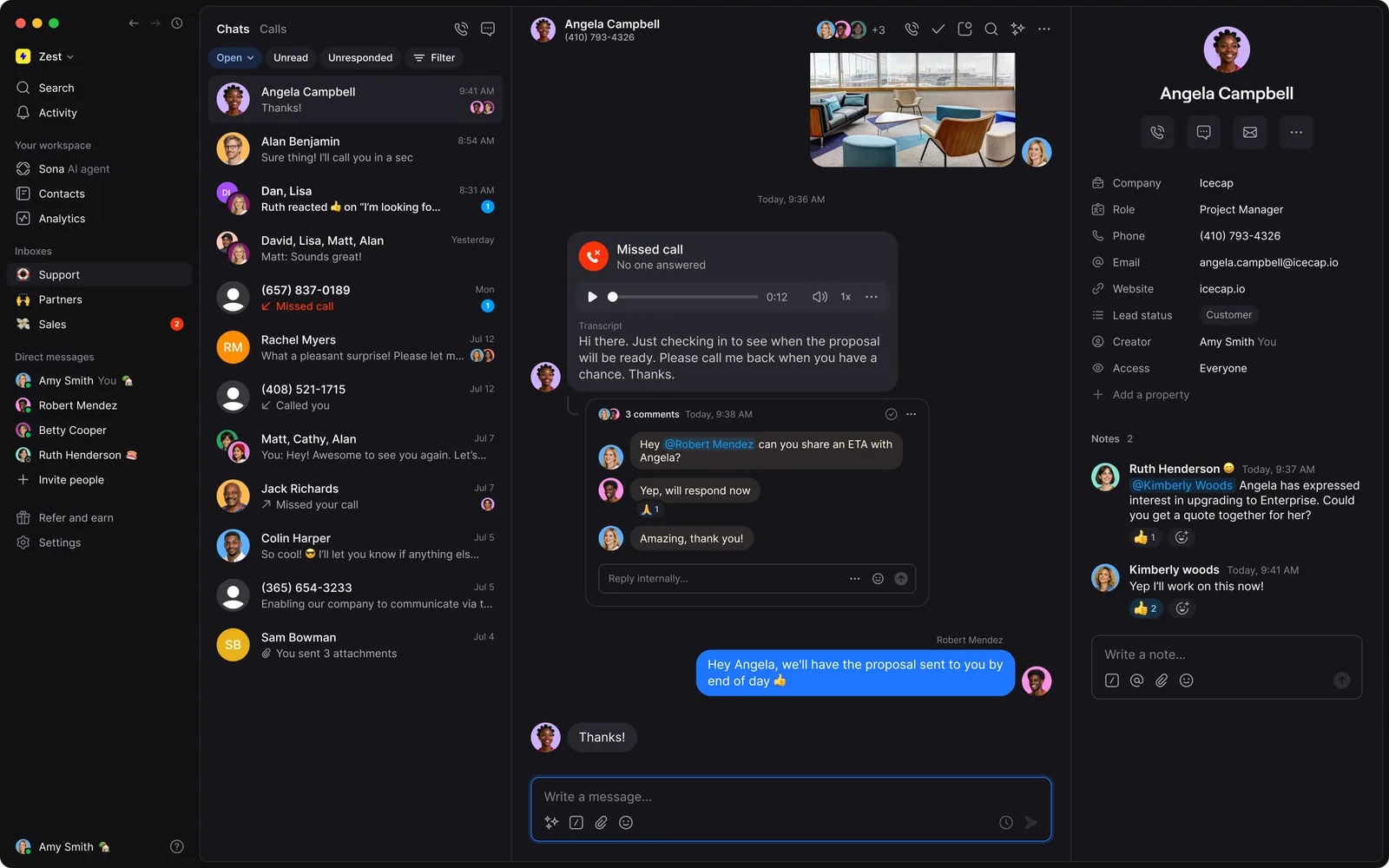
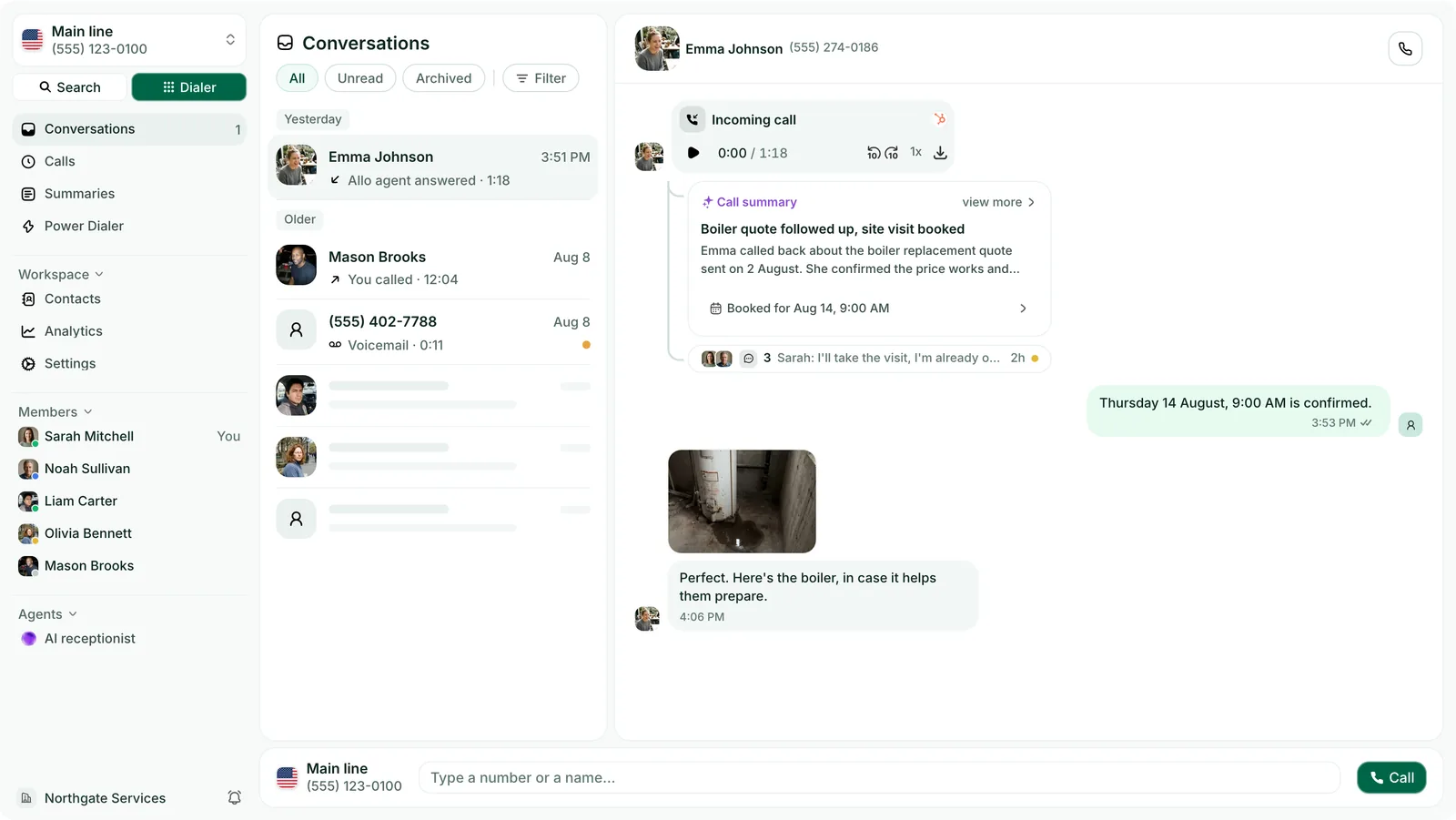
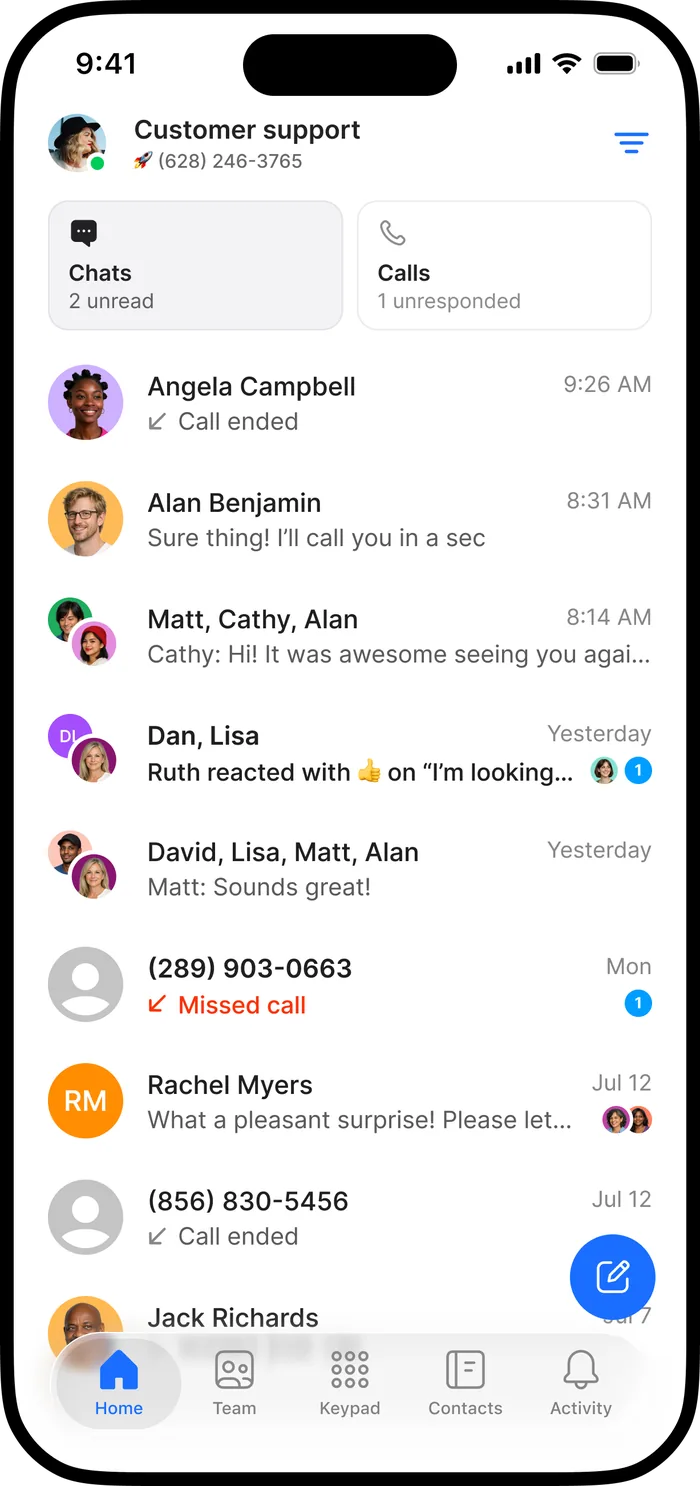
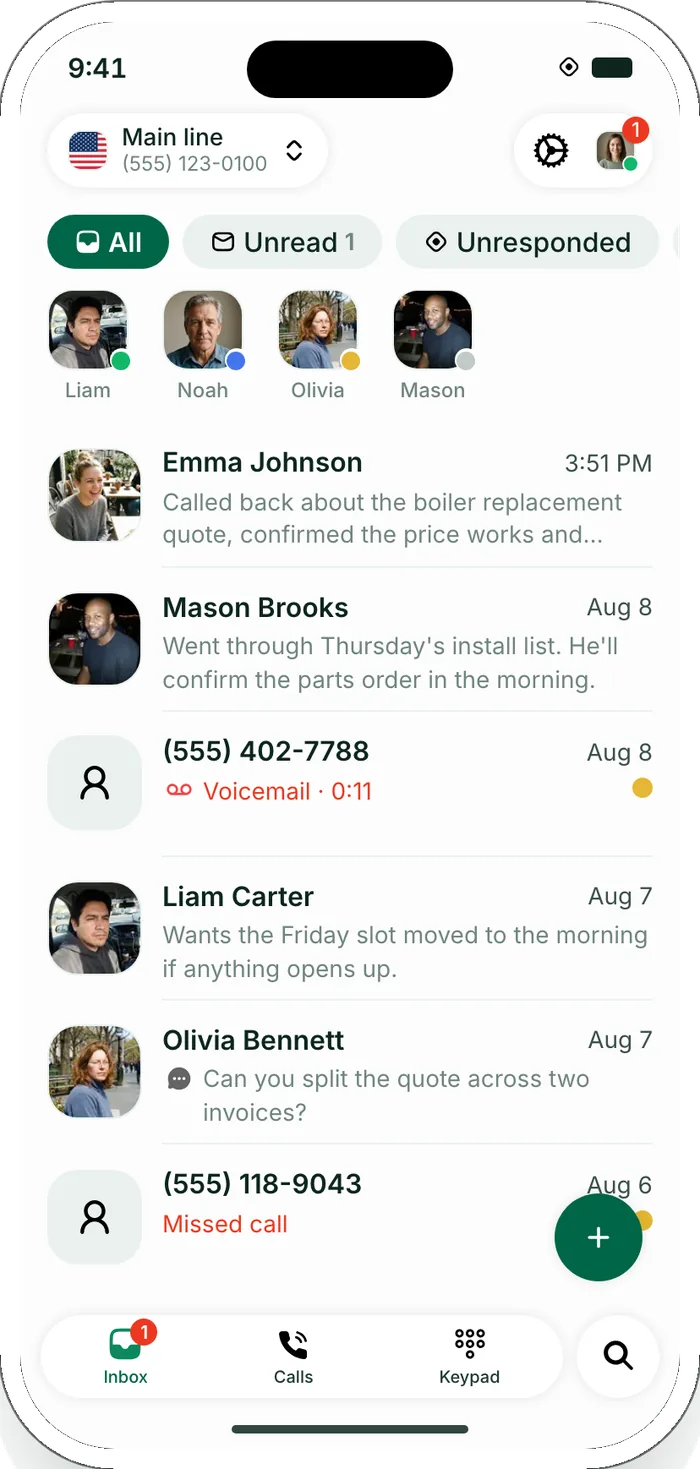
Both are business phone systems that live on your phone, your desktop and the web. Real work number, calling and texting from it, an app instead of a desk phone.
They come at it from different places, and that shapes everything below.
Built around the shared number
Quo has been selling a business phone since 2018 and renamed from OpenPhone in September 2025. The idea at its center is a number a team shares, with the calls, texts and notes sitting in one inbox everyone can see.
It's the one to reach for when you want a work number that behaves, with the least to explain to staff.
Built around what happens after the call
Allo launched its phone product in 2024. It treats a phone line more like an inbox: calls get tagged, filed and summarized, and the work that follows a call gets handled rather than left on a sticky note.
It leans toward teams that dial out, and toward anyone whose real problem is the admin piling up behind the calls.
Both run on iOS, Android, desktop and the web. Both port your existing number for free. Both give every user their own line.
A lot of comparison pages get written from whatever the vendor emailed over.
This one didn't. Both run as paid workspaces inside Creed8 and we use them on client work, so when a pricing page and the product disagree, we catch it.
Their pricing pages
Plan cards, add-ons, feature tables and pricing FAQs, read in the US market on 15 September 2026.
Both billing cycles
Annual and monthly, side by side. On one of these, the cycle you pick changes which one is cheaper.
Live paid workspaces
Both in daily use here. The setup notes are firsthand, not from a demo.
Kept current
Pricing and features change. We'll keep this page updated as best we can, and where we couldn't confirm something, we say so.
What each plan costs
What this covers: the seat price for the phone system itself. The AI receptionist is priced separately on both platforms, and that's the next section down.
Both run three tiers and both knock money off if you pay for the year up front. Every software company puts the per-month-billed-annually figure in big type, so we put the yearly total next to it. That's the number leaving your account.
| Plan | Monthly | Annual | Per year |
|---|---|---|---|
| Starter | $19 | $15 | $180 |
| Business | $33 | $23 | $276 |
| Scale | $47 | $35 | $420 |
| Plan | Monthly | Annual | Per year |
|---|---|---|---|
| SoloComing soon | Annual only | $10 | $120* |
| Business | $45 | $32 | $384* |
| Ultra | $120 | $100 | $1,200* |
Per user, per month. Sources: quo.com/pricing and withallo.com/pricing, US market, read 15 September 2026. Quo's yearly totals are their own published figures. Allo doesn't publish yearly totals, so the three marked * are our arithmetic. Allo states its pricing is early and can still change.
Solo has a price on it but isn't on sale yet. So the cheapest Allo plan you can buy today is Business.
Allo's pricing page carries a "save 29%" banner. That holds for the Business plan. On Ultra the annual saving works out closer to 17%. Check the tier you're buying, not the banner.
The day to day, before any AI gets involved
What this covers: calling, texting, working as a team, and the apps. Everything a phone system has to get right whether or not you ever switch an AI on.
Most of it overlaps. Every user gets a number, calling in the US and Canada is unlimited, both record calls, both port for free, both bill international by the minute. Here's where they split.
| Feature | Quo | Allo |
|---|---|---|
| Texting | Unlimited messaging to US and Canadian numbers on every plan, subject to their fair use policy. Carrier registration required | Inbound SMS unlimited on every plan. Outbound SMS included in the US on Business and Ultra. Sending elsewhere uses credits, with $5 of credit included per seat per month. 10DLC registration required for US and Canadian numbers |
| Phone menu, press 1 or 2 | Business and Scale | Listed as a product, plan not shown on their pricing page |
| Call transfers | Warm transfers on Business and Scale | Warm transfer is a setting in the product. Plan not shown on their pricing page |
| Call recording | Manual on Starter, automatic on Business and Scale | Every plan |
| Group calling and ring order | Group calling, custom ring orders and advanced call forwarding on Business and Scale | Cascade and simultaneous ring listed as a product, plan not shown on their pricing page |
| Power dialer | Not listed on their pricing page | $50 a month for the whole team, any plan |
| Missed call auto text back | Auto-replies to texts, missed calls and voicemails, every plan | Automatic SMS on every missed call, every plan |
| Click to call extension | Not listed on their pricing page | Business and Ultra |
| International calling | Per minute or per message by destination, billed using credits | Pay as you go, 192 destinations |
| Feature | Quo | Allo |
|---|---|---|
| Shared number | Shared phone number for up to 10 paid users on Starter, unlimited paid users on Business and Scale | One business number included per user. Collaborative inbox and notes on Business and Ultra |
| Internal notes and mentions | Internal threads on every plan | Internal notes and mentions on Business and Ultra |
| Analytics and reporting | Business and Scale | Call analytics and team leaderboards on Business. Custom analytics dashboards on Ultra |
| CRM connections | HubSpot, Salesforce, Zoho, Pipedrive, Attio, Clio, Jobber, Gong and HighLevel, on Business and Scale | Native CRM autofill on every plan. CRM sync with HubSpot, Pipedrive, Attio and Salesforce on Business and Ultra |
| Other integrations | Slack, Zapier, Make, Google Contacts, webhooks and email, on every plan | Apollo, Notion, Odoo, Sellsy, Shopify, Streak, Zapier, Zoho Flow and webhooks. Plan not shown on their pricing page |
| Support | Email on Starter. Live chat on Business. Priority and inbound phone support on Scale, weekdays 8 to 5 Pacific | Email on Solo. Live chat and priority on Business. Slack, a dedicated account manager and an SLA on Ultra. A public support line is listed on their site for every plan |
| Published uptime | Not published on the pricing page | 99.94% |
Sources: the plan comparison tables at quo.com/pricing and withallo.com/pricing. Rows are stated the way each company states them. Where a row says not listed or plan not shown, it means we could not find it on that vendor's own pricing page. It does not mean the feature is missing.
Now the AI receptionist, which is priced separately on both
What this covers: the AI that answers when nobody picks up, and what it costs. This sits on top of the plan prices above, on both platforms. If you never switch it on, the seat price is your whole bill.
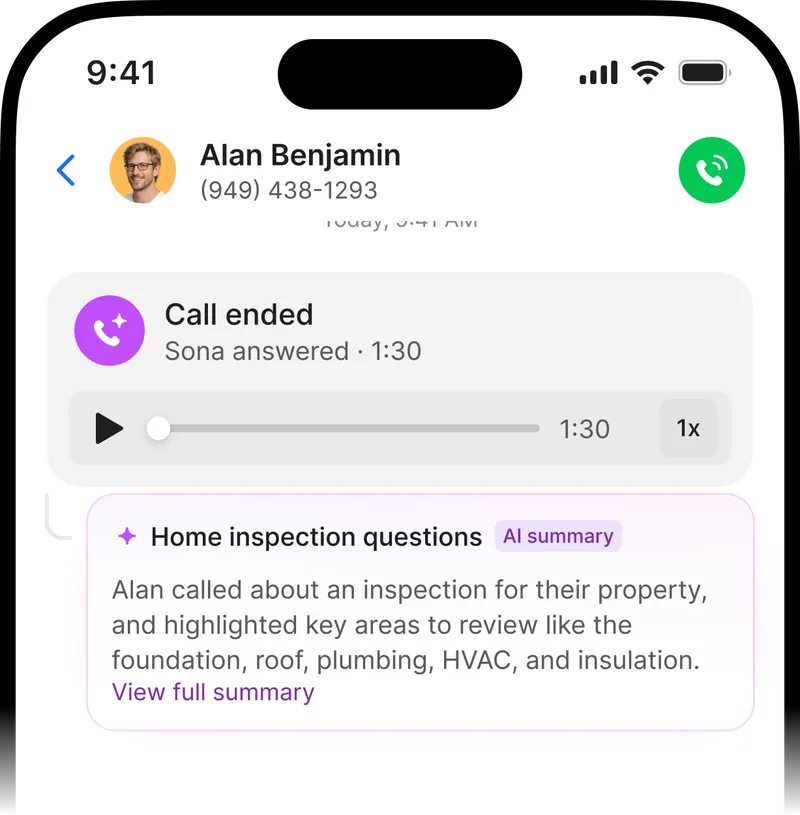
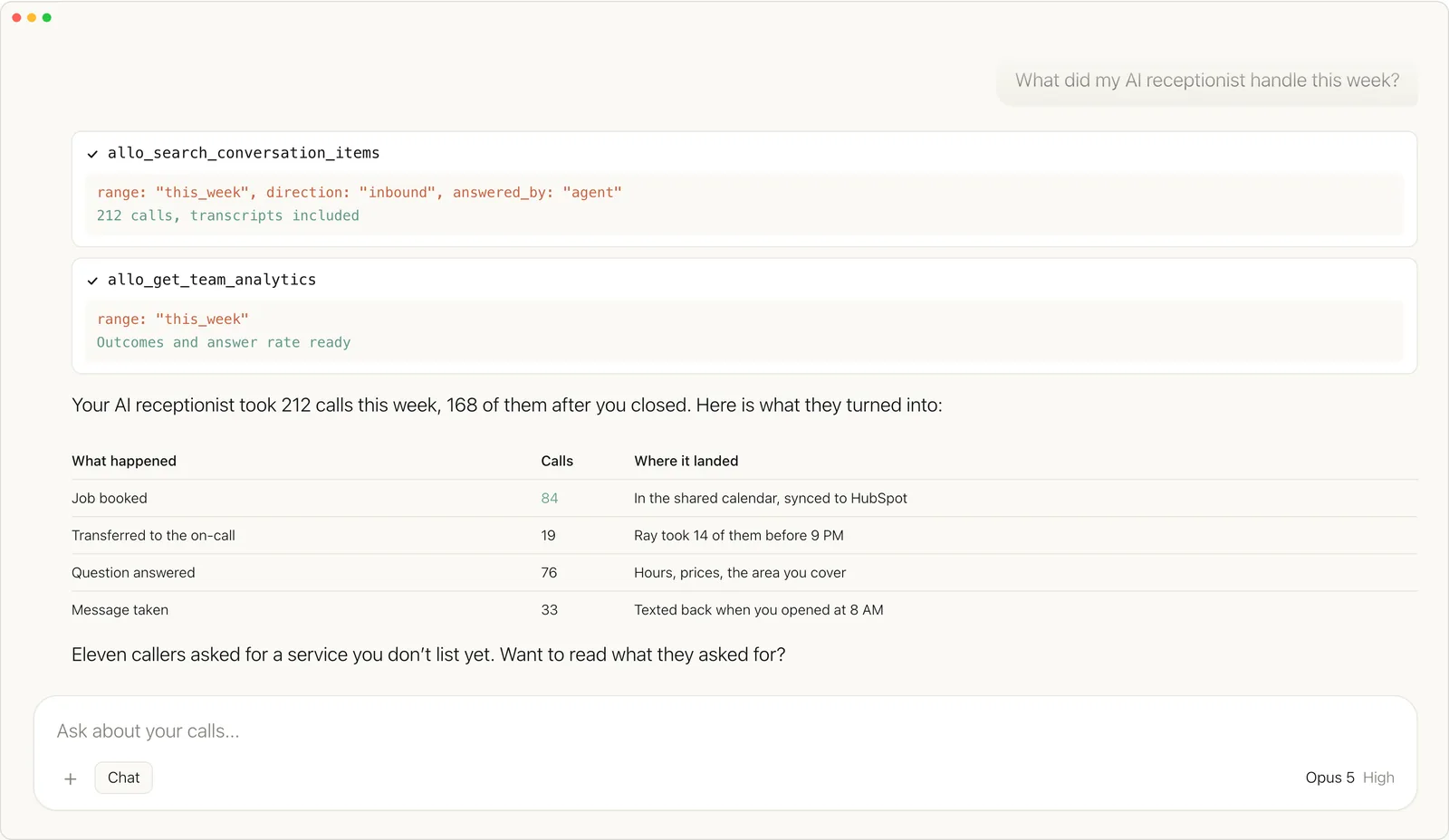
Quo calls theirs Sona. Allo calls theirs the AI Receptionist. Both answer around the clock, take several calls at once, book appointments, and hand callers to a person when they ask for one.
The difference isn't what they do. It's how you pay.
Meter or flat rate
Think about paying for a car.
A taxi meter is cheap when you barely go anywhere and keeps ticking the further you drive. A bus pass costs more on a week you stay home and exactly the same on a week you never stop.
Same trip. Two completely different bills.
Quo runs a meter on the calls its AI answers. Allo charges a flat seat and doesn't count them.
One thing gets reported wrong constantly. This isn't free against paid.
Both hand you a small amount of AI answering with the plan, then charge for real use. Quo includes Sona on every plan with 1,000 credits, around ten answered calls a month, then sells you a credit tier. Allo covers transcription, summaries, tags and CRM sync inside the plan, and prices the receptionist as one more seat with no meter on it.
Meter or flat rate. Pick whichever one matches how your phone actually rings.
| Tier | Calls included | Overage |
|---|---|---|
| $0 | 10 | $1.00 |
| $25 / mo | 40 | $0.75 |
| $49 / mo | 100 | $0.65 |
| $99 / mo | 250 | $0.55 |
| $199 / mo | 600 | $0.45 |
One answered call costs 100 credits. Overage is charged per call past the tier. Sona answers inbound calls only.
A flat seat, no meter
Priced the same as one Business seat and it follows whichever billing cycle you're on. $32 a month annual, $45 monthly. The answering isn't counted.
- Answers day and night
- Books appointments and takes messages
- Sends the SMS follow-up automatically
- Updates your CRM after every call
- Speaks English, French, Spanish, German or Croatian
| Feature | Quo | Allo |
|---|---|---|
| Summaries and transcripts | Available for Sona-handled calls on Starter. All calls on Business and Scale | AI summaries and transcripts on every plan |
| Receptionist languages | Not listed on their pricing page | English, French, Canadian French, Spanish, German and Croatian. 32 voices in the catalogue their API returns |
| AI drafted text replies | AI message responses on every plan | AI post-call actions draft the follow-up, Business and Ultra |
| AI call tags | Scale only | Business and Ultra, synced to CRM |
| Custom summary templates | Not listed on their pricing page | Business and Ultra |
| AI post-call actions | Not listed on their pricing page | Business and Ultra |
| What the AI answers | Sona answers inbound calls only, per Quo | The receptionist answers inbound. Ultra adds a set of AI agents including an AI SDR, a lead qualifier and a support agent |
| Run it from Claude or ChatGPT | ChatGPT / Claude MCP on every plan | Allo MCP on Business and Ultra |
| What the connector can do | Quo describes it as analysing calls, texts and contacts from Claude and ChatGPT. Running it here, it reads calls, texts, transcripts and contacts, sends texts, and creates contacts and tasks | Allo describes it as running Allo from Claude. Running it here, it reads and writes, down to the receptionist configuration, its prompt, transfer rules, call flow drafts, dialing queues and analytics |
Sources: quo.com/pricing and withallo.com/pricing. Sona answering inbound calls only is stated on quo.com/sona. The language and voice list comes from Allo's own API, read on 15 September 2026. Rows are stated the way each company states them, and where a row says not listed it means we could not find it on that vendor's pricing page.
One thing to know before you compare the headline prices
Quo's cheapest plan with the AI agent already on it is Starter, at $15. Allo's Solo tier isn't purchasable yet, so the cheapest Allo setup with a receptionist is a Business seat plus the receptionist seat.
At the low end that's a real gap, and neither marketing page frames it that way.
What the AI receptionist costs as it answers more calls
What this covers: one person, one number, with the AI receptionist switched on and picking up whatever you miss. Seat plus AI, on both. This is not the cost of the phone system on its own.
Allo is a Business seat plus the receptionist seat. Quo is a Business seat plus whichever credit tier covers that volume. We ran it both ways, because the billing cycle moves the answer.
| AI answered calls / mo | Quo | Allo |
|---|---|---|
| 10 | $23 | $64 |
| 40 | $48 | $64 |
| 100 | $72 | $64 |
| 250 | $122 | $64 |
| 600 | $222 | $64 |
Crossover: between 40 and 100 calls a month.
| AI answered calls / mo | Quo | Allo |
|---|---|---|
| 10 | $33 | $90 |
| 40 | $58 | $90 |
| 100 | $82 | $90 |
| 250 | $132 | $90 |
| 600 | $232 | $90 |
Crossover: between 100 and 250 calls a month.
Line those two up and the gap is hard to miss.
Paying monthly on Allo runs 41% higher than paying yearly, and it shoves the crossover point up by more than a hundred calls a month.
If your volume lands in that middle band and you're buying month to month, the annual table would send you the wrong way. Check which cycle you're on first.
A second person on the account changes both sides, since both bill per seat. These figures leave out the one-time US carrier registration both platforms require, $19.50 on Quo and $24 on Allo, and Quo's recurring carrier messaging fee of $1.50 to $3 a month, because none of those move with call volume.
The bits that show up at checkout
What this covers: registration fees, compliance paperwork and the small recurring charges that don't appear on either pricing card but do appear on your invoice.
| Item | Quo | Allo |
|---|---|---|
| US carrier registration | $19.50 one time | $24 one time |
| Carrier messaging fee | $1.50 to $3 a month | Not listed |
| Extra numbers | $5 a month each | From $5 a month each |
| HIPAA | HIPAA ready on Business and Scale. No separate fee listed | Business Associate Agreement at $50 a month per workspace |
| SOC 2 and audit log | SOC 2 report and audit log, available through sales on every plan. AICPA SOC Certified badge on their site | Not listed on their pricing page |
| Contract | None. Month to month | None. Month to month |
| Free trial | Seven days | Seven days |
| Number porting | Free | Free |
Sources: quo.com/pricing and withallo.com/pricing. If you handle patient information, the compliance row is the one to read twice.
What users say
Star ratings on their own tell you nothing.
Quo has sold a phone product since 2018. Allo launched theirs in 2024. That gap is most of the review story, so read the counts before the scores.
The most approachable business phone in the category. Clean interface. Fast porting. Strong value at the entry price. Shared numbers and the team inbox get named constantly.
Support responsiveness is the big one, and it shows up inside positive reviews too. Slow ticket turnaround, and starting over with a new person each time. Bugs get mentioned. Call reliability comes up from people working across borders. And a recurring theme is the entry tier understating the real cost, because teams outgrow Starter and then meet registration fees, messaging fees, number fees and Sona credits.
Call summaries and transcription are the standout, named across multiple reviews. Setup speed. Interface quality. The mobile app gets described as a full product rather than a stripped-down version of the desktop one.
Call quality on weak connections. App stability, including freezes and crashes reported on Android. Support depth. And the review base is small enough that no single theme carries much weight yet.
Source: G2 product listings, read 15 September 2026. Allo's review count shifts depending which G2 page you land on, and G2 lists more than one product called Allo, so take any single number lightly. Either way the sample is small enough that one strong review moves it. Three thousand doesn't budge. Support depth and call quality on a bad connection turn up in the reviews for both. We'd call that a category problem, not a mark against either one.
Where your phone sits in the Loop System
At Creed8 we look at a business as a set of loops. Someone finds you, trusts you, books you, pays you, hears back from you. When one breaks, it costs you trust, time, or money.
Your phone line isn't one loop. It runs through four of them.
Someone calls and nobody picks up. It just died at the front door.
They get through, but pinning down a time takes three more calls.
The call goes great and then nothing happens, because the details live in your head instead of your CRM.
They call back with a question and whoever answers has no idea what was said the first time.
Swapping to a better phone app doesn't fix any of that on its own.
What fixes it is connecting that app to everything else you run, and that's usually where it falls apart.
So which one
We're partners with both and we recommend both. Not because it's the diplomatic answer. Because the clients we put on one are not the clients we put on the other.
Go with Quo
- A team shares one number and needs one inbox everybody can see
- Texting matters and you want it unlimited from the $15 plan up
- Under roughly 40 AI answered calls a month, where a meter is cheaper
- You need SOC 2 paperwork, or the longest track record in the category
- You want to run the phone system from Claude or ChatGPT on any plan
Choose Allo
- You're dialling out all day and want the power dialer in the same product
- The admin after the call is what eats your week, not the call itself
- Past roughly 100 AI answered calls a month, where a flat seat stops the climb
- You want summaries and transcripts on every call from the entry tier
- Phone menus and warm transfers matter and you don't want to buy a tier up
Both links are referral links. We get paid either way, which is why this page leads with their numbers instead of our pick. Both run a seven day trial, and honestly nothing here beats twenty minutes inside the product. Sign up for whichever one the tables pointed you toward, call your own number, and hear how it sounds.
Getting it set up
We're tech agnostic and we plan on staying that way. We're not handing you a platform because we're partnered with them and calling it a recommendation.
Picking the platform is the easy half anyway.
The half that eats your week is porting your number without losing the settings behind it. Building the call flow. Writing the receptionist so it sounds like you and not a robot reading a script. Then wiring it into your CRM, your email and your payments so customer details stop getting retyped by hand.
No messy tools. Just tech, simplified.
- Platform picked on how your calls actually come in, not on who we partner with
- Number porting, with the settings checked after the port instead of assumed
- Call flows and the AI receptionist, built and tested against real scenarios
- Multiple numbers and migrations from another service
- Connected through the Loop System to your CRM, email and payments
Creed8 is a Quo Certified Expert and an Allo partner.
The ones we get asked most
Is OpenPhone the same as Quo?
Yes. Same company, renamed in September 2025. You'll still see openphone.com on some signup and app links, and the corporate entity is still OpenPhone Technologies.
Which one is cheaper?
For the phone system on its own, Quo, at every tier. Once you add the AI receptionist it depends on volume: under about 40 answered calls a month Quo stays cheaper, over about 100 Allo is cheaper and then stays flat.
Can several people share one number?
Quo lists a shared phone number for up to 10 paid users on Starter and unlimited paid users on Business and Scale. Allo includes one business number per user, and lists a collaborative inbox and notes on Business and Ultra.
Is the AI receptionist included, or extra?
Different answer on each. Quo includes Sona on every plan and sells credits for the calls it answers. Allo includes transcription, summaries, tags and CRM sync in the plan, and bills the receptionist as one more seat. Meter or flat rate, not free or paid.
Does the AI only answer, or can it call out too?
Quo states plainly that Sona answers inbound calls only. Allo's receptionist also answers inbound, and their Ultra plan adds a set of AI agents including an AI SDR and a lead qualifier. Their pricing page doesn't say whether those place calls, so ask before you buy on that basis.
Can I keep my existing number?
Both port for free, and both keep the old line working while the transfer runs. Check your call flow, hours and routing after any port, on either platform.
You're partners with both. How is this neutral?
Being partners with both is what makes it neutral. We get paid the same either way. Every figure comes off their published pricing pages, both linked under every table, and where a vendor doesn't publish something we say so.
Either way, stop running your business off your personal cell.
Tell us how your calls actually come in and we'll tell you which one we'd put you on, whether or not you hire us to set it up.
Creed8 is a Quo Certified Expert and an Allo partner. Both product links are affiliate links.
Prices, plans and features on this page were read from quo.com/pricing and withallo.com/pricing on 15 September 2026, US market. Both companies change them regularly, so check the current page before you buy. Allo states its own pricing is early and can still change. Anything not pulled directly from a vendor page is our own assessment and can change as the products do.